
Enhanced Oil Recovery
Guidance, requirements and best practices for enhanced oil recovery projects in Alberta, BC and Saskatchewan.
Enhanced Oil Recovery (EOR)
Overview
Enhanced oil recovery, or EOR, refers to injection or recovery processes used to improve hydrocarbon recovery beyond what would be expected under primary depletion alone. Common EOR and pressure maintenance methods include waterflooding, gas injection, gas cycling, miscible flooding, solvent injection, polymer or chemical injection, thermal recovery, and CO₂ injection.
In Alberta, EOR schemes are applied for under AER Directive 065. The AER’s objective in regulating enhanced recovery schemes is to optimize hydrocarbon recovery while ensuring operations are safe, protect the environment, are in the public interest, and are fair to other well licensees.
In British Columbia, pressure maintenance or improved recovery projects, including waterflood, gas injection, and EOR projects, may be approved as Special Project Orders. BCER approvals specify the injection wells, maximum wellhead injection pressure, maximum average reservoir pressure, and other operating or reporting conditions.
In Saskatchewan, injection wells linked to EOR, waterflood, storage, geothermal, lithium, and other approved project types must meet Directive PNG008 requirements for disposal and injection wells, including completion, operation, monitoring, logging, and MWHIP requirements.
Approval Types
EOR and pressure maintenance approvals may include:
-
New waterflood schemes
-
Waterflood amendments
-
Gas injection schemes
-
Gas cycling schemes
-
Miscible flood schemes
-
Water-alternating-gas (WAG) schemes
-
Polymer or chemical flood projects
-
Thermal EOR projects
-
CO₂ EOR schemes
-
CO₂ EOR storage schemes
-
Pressure maintenance projects
-
Improved recovery projects
-
Injection well additions
-
Approval area expansions
-
Changes to approval conditions
-
Scheme termination applications
In Alberta, Directive 065 requires the applicant to select the predominant ER scheme type, even where multiple injection fluids may be used. For example, a WAG scheme may still be considered a miscible scheme if the predominant recovery mechanism is miscibility.
For BC, the relevant application category is generally a Pressure Maintenance or Improved Recovery Project, which may include waterflooding, gas injection, or another improved recovery method.
For Saskatchewan, the wellbore and injection-well requirements are addressed through Directive PNG008, which defines a “project” as a development grouping one or more wells for approval of a specialized scheme, including waterflood, EOR, storage, geothermal, lithium, and other project types approved by Energy and Resources.
Application Process
A practical EOR application process usually includes:
-
Define the recovery objective.
-
Confirm the jurisdiction and approval pathway.
-
Identify whether the application is for a new scheme, amendment, additional injection well, approval-area change, or termination.
-
Confirm the proposed injection fluid and source.
-
Review mineral ownership, working interest, well licensees, and offset operators.
-
Define the proposed approval area.
-
Prepare geological mapping and pool interpretation.
-
Prepare reservoir engineering support.
-
Evaluate injectivity and proposed MWHIP.
-
Confirm wellbore integrity and logging/testing requirements.
-
Complete notification or consultation.
-
Prepare the application package and supporting attachments.
-
Submit to the regulator.
-
Respond to regulator questions.
-
Monitor and report scheme performance after approval.
In Alberta, ER scheme applications are submitted using the Directive 065 enhanced recovery scheme application form, Schedule 1, and required attachments. The AER notes that incomplete applications or applications with significant errors may be closed.
Alberta also allows an optional pre-drill process for some ER schemes where proposed injectors have not yet been drilled, allowing operators to obtain conditional approval before drilling and before making larger investment decisions.
In BC, applications for pressure maintenance or improved recovery projects should include the project description, well information, maps, geology and reservoir information, reservoir performance history, proposed injection plan, wellbore integrity information, surface facilities, and letters from interested parties.
Data Requirements
A complete EOR application should typically include:
-
Applicant and approval holder information
-
Existing approval number, if applicable
-
Scheme type
-
Proposed approval area
-
Injection well locations
-
Injection intervals
-
Proposed injection fluid
-
Source of injection fluid
-
Production and injection forecasts
-
Pool order boundary
-
Well status map
-
Offset scheme areas
-
Proposed scheme area map
-
Structure map
-
Net pay isopach map
-
Well logs
-
Formation tops
-
Pressure data and interpretation
-
Reserves data
-
Production history
-
Injection history
-
Injectivity test data
-
Wellbore schematics
-
Completion details
-
Casing and tubing details
-
Packer depths
-
Fluid compatibility information
-
Surface facilities and metering details
-
Notification records
-
Unresolved concerns, if any
In Alberta, Directive 065 lists required ER scheme application documents, including Schedule 1, the ER scheme application form, application attachment, approval area map, PVT data, reserves data, injectivity test data or Appendix O MWHIP, licensee concerns if applicable, isopach maps, well logs, pressure data and interpretation, and a structure map for new gas cycling schemes.
In BC, the pressure maintenance/improved recovery guideline identifies application information such as well names and locations, project area maps, tenure maps, well status and completion maps, geology of the pool, cross-sections or fence diagrams, structure maps, porosity maps, net pay, porosity, permeability, water saturation, fluid contacts, production histories, PVT properties, hydrocarbon-in-place estimates, recovery predictions, injection pattern optimization, injection-fluid source, and fluid compatibility.
Geological Requirements
The geological review should define the pool, reservoir continuity, approval area, and expected sweep area.
Typical geological requirements include:
-
Pool boundary and current pool order
-
Structure map
-
Net pay isopach map
-
Porosity interval
-
Formation tops
-
Cross-sections or fence diagrams
-
Well logs
-
Lithology
-
Reservoir continuity
-
Fluid contacts
-
Gas/oil contact
-
Oil/water contact
-
Reservoir thickness
-
Porosity
-
Permeability
-
Water saturation
-
Faults or barriers
-
Offset pools or schemes
-
Existing well completions
-
Areas expected to be swept by injectors
For Alberta ER applications, the proposed approval area must reflect the area anticipated to be swept by the scheme injectors and should conform to the AER-approved spacing.
BC’s application guideline similarly asks for a discussion of the pool geology, relevant cross-sections or fence diagrams, structure mapping, top/base of porosity, net pay isopach maps, porosity, permeability, water saturation, and fluid-interface elevations.
For CO₂ EOR storage schemes in Alberta, additional geological containment information may be required, including discussion of upper and lower confining intervals, isopach maps of containment intervals, interpreted and annotated cross-sections, fault mapping, seismic interpretation where available, and expanded mapping if containment impacts may extend beyond the applied-for scheme area.
Engineering Requirements
The engineering review should demonstrate that the proposed scheme is technically sound, improves recovery, and can be operated within safe and approved pressure limits.
Typical engineering requirements include:
-
Recovery mechanism explanation
-
Injection fluid source and availability
-
Injection fluid compatibility
-
Injection pattern design
-
Injection start-up schedule
-
Predicted injection rates
-
Predicted production response
-
Predicted ultimate recovery
-
Injectivity test data
-
Step rate test or in-situ stress data, where applicable
-
Production forecast
-
Injection forecast
-
Reserves estimate
-
Sweep efficiency estimate
-
Material balance or simulation support
-
Tubing, casing, and packer configuration
-
Metering and pressure monitoring
-
Surface injection-fluid handling facilities
BC’s guideline asks for the need for the improved recovery scheme, the reasons for the selected method, predicted rate-time performance and ultimate recovery, relevant laboratory results, areal, vertical and displacement sweep efficiency methods, injection and production forecasts, injection pattern optimization, injection start-up schedule, and the proposed reservoir withdrawal balance.
In Alberta, all injection wells are subject to MWHIP. Directive 065 states that MWHIP may be based on step-rate injectivity testing, in-situ stress tests, reliable analogous offset data, or the Appendix O default table where no test or analogous data are available.
In Saskatchewan, Directive PNG008 requires all disposal and injection wells to be subject to MWHIP, and disposal/injection pressure must not exceed formation fracture pressure. The directive identifies step-rate injectivity testing, in-situ stress testing, or reliable offset data as ways to determine fracture pressure, with a 90 percent safety factor unless otherwise approved.
Regulatory Requirements
-
Alberta
Alberta EOR schemes are governed by AER Directive 065. The application is made using Schedule 1, the Enhanced Recovery Scheme Application Form in Appendix F, and required attachments.
Directive 065 states that injection must not begin in a well until written confirmation has been received that the ER scheme application has been approved and Directive 051 requirements have been met.
Directive 065 also states that injection pressures must remain below the approved MWHIP at all times, approval holders must comply with initial and subsequent Directive 051 requirements, and injection operations containing H₂S must meet Directive 071 requirements.
For miscible flood schemes, Alberta requires additional support such as proof of miscibility with the reservoir oil, typically through slim tube or rising-bubble tests, and information to establish minimum miscibility pressure or related miscibility conditions.
For CO₂ EOR storage schemes, Alberta requires additional rights from Alberta Energy and Minerals to inject CO₂ into the proposed zone, storage and containment support, monitoring, measurement and verification, and annual progress reporting.
-
British Columbia
In BC, pressure maintenance and improved recovery projects are approved as Special Projects under section 75 of the Energy Resource Activities Act. The approval may specify the injection wells, MWHIP, maximum average reservoir pressure, operating conditions, and reporting requirements.
BCER may require progress reports for pressure maintenance projects. These reports are used to review performance, identify operational opportunities, and confirm that approved operating conditions are being met and conservation is being achieved.
-
Saskatchewan
In Saskatchewan, injection wells associated with waterflood, EOR, and other projects must comply with Directive PNG008. This includes requirements for licensing, completion, operation, monitoring, logging, MWHIP, casing and cementing, injectivity testing, measurement, reporting, and data submission.
Directive PNG008 also requires corrosion-resistant casing and cement materials for wells injecting corrosive substances such as CO₂, H₂S, or salt water, and identifies thermal casing and cement requirements for new injection and disposal wells within or near approved thermal EOR project areas.
Stakeholder Engagement
EOR applications often affect other working interest owners, well licensees, offset operators, mineral owners, and other subsurface users.
In Alberta, Directive 065 requires notification of all well licensees before submitting an ER scheme application. Applicants must retain the list of notified licensees, notification documents, and responses. If there are unresolved licensee concerns, a Licensee Concerns attachment must be included with the application.
In BC, where the applicant is not the permit holder for all wells in the pool, the Regulator expects consultation before the application is made. The BC guideline also notes that written statements from other interested parties may be provided to indicate their reaction to the proposed improved recovery scheme.
In Saskatchewan, Directive PNG008 requires declarations or agreements related to injection wells linked to enhanced recovery. It also requires notification of offsetting or impacted mineral owners or operators whose lands offset the proposed well, unless an exemption applies.
Stakeholder engagement should address:
-
Approval area
-
Injection well locations
-
Injection intervals
-
Expected pressure effects
-
Offset production impacts
-
Equity concerns
-
Lease-line wells
-
Unitization or ownership issues
-
Injection-fluid source
-
Potential pressure communication
-
Proposed monitoring and reporting
Common Deficiencies
Common EOR application deficiencies include:
-
Unclear recovery mechanism
-
Incorrect scheme type selected
-
Missing application or schedule forms
-
Proposed approval area does not match expected swept area
-
Missing well licensee notification
-
Unresolved licensee concerns not addressed
-
Injection source not secured
-
Missing water diversion approval where nonsaline water is used
-
Incomplete PVT data
-
Missing reserves information
-
Incomplete production or pressure history
-
Missing isopach maps
-
Missing well logs
-
Missing pressure interpretation
-
Missing injectivity or MWHIP support
-
Incomplete Directive 051 / wellbore integrity review
-
Incomplete injection interval details
-
Poorly justified injection pattern
-
No clear VRR or reservoir withdrawal balance strategy
-
No fluid compatibility discussion
-
Missing proof of miscibility for miscible floods
-
No progress reporting plan
-
Inadequate consultation with offset or affected parties
For Alberta, failure to complete notification as required may result in the application being closed without processing. Directive 065 also notes that incomplete applications or applications with significant errors may be closed.
For BC, common issues include missing project-area maps, insufficient pool history, weak recovery prediction, incomplete injection-fluid compatibility discussion, missing wellbore integrity information, and lack of written statements from interested parties where needed.
Frequently Asked Questions
What is an EOR scheme?
An EOR scheme is a recovery process designed to improve hydrocarbon recovery beyond primary depletion. Common examples include waterflooding, gas injection, gas cycling, miscible flooding, polymer injection, thermal recovery, and CO₂ injection.
What is the difference between waterflood and pressure maintenance?
A waterflood injects water to displace oil and improve sweep efficiency. Pressure maintenance focuses on maintaining reservoir pressure to support production and improve recovery. In practice, many waterflood projects also provide pressure maintenance.
Does an Alberta EOR scheme require Directive 065 approval?
Yes. Alberta EOR schemes are applied for under AER Directive 065 using the Enhanced Recovery Scheme Application Form and required attachments.
Can injection start before the ER approval is issued?
No. In Alberta, injection cannot begin until the ER scheme is approved and Directive 051 requirements have been met.
MWHIP is the maximum wellhead injection pressure. Injection pressures must stay below the approved MWHIP. Alberta, BC, and Saskatchewan all use MWHIP as an important operating limit for injection wells.
What if no injectivity test is available?
In Alberta, where injectivity test data or reliable analogous data are not available, Directive 065 indicates that MWHIP may be assigned using the Appendix O default table.
What is VRR?
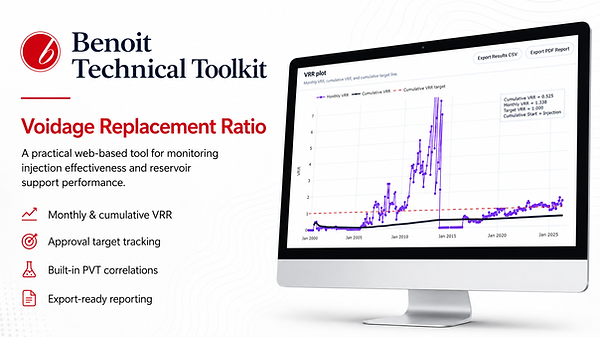
VRR means voidage replacement ratio. It compares injected reservoir volumes to produced reservoir volumes. BCER progress report guidance identifies VRR as a central part of pressure maintenance reporting.
What is required for a miscible flood?
In Alberta, new miscible flood applications require proof of miscibility, typically through slim tube or rising-bubble testing, and support for the proposed miscibility conditions such as minimum miscibility pressure or injection-fluid composition versus pressure.
What makes CO₂ EOR different?
CO₂ EOR may require additional containment, storage, monitoring, measurement, verification, and reporting support. Alberta Directive 065 includes additional requirements for CO₂ EOR storage schemes, including CO₂ rights, containment assessment, storage capacity, monitoring, and reporting.
Does Saskatchewan have specific injection well requirements for EOR projects?
Yes. Saskatchewan Directive PNG008 applies to disposal and injection wells and defines project types to include waterflood, EOR, storage, geothermal, lithium, and other approved projects.
Related Technical Tools
Related technical tools may include:
Need Assistance?
Enhanced recovery applications require coordination between reservoir engineering, geology, wellbore integrity, injection operations, regulatory requirements, and stakeholder considerations. Benoit Regulatory can help operators prepare new EOR applications, amend existing schemes, add injection wells, support MWHIP requests, evaluate Directive 051 requirements, and respond to regulator questions in Alberta, British Columbia, and Saskatchewan.
Need help with an application?
Our team can help you navigate regulatory requirements, prepare strong applications and avoid costly delays
587.880.2249
